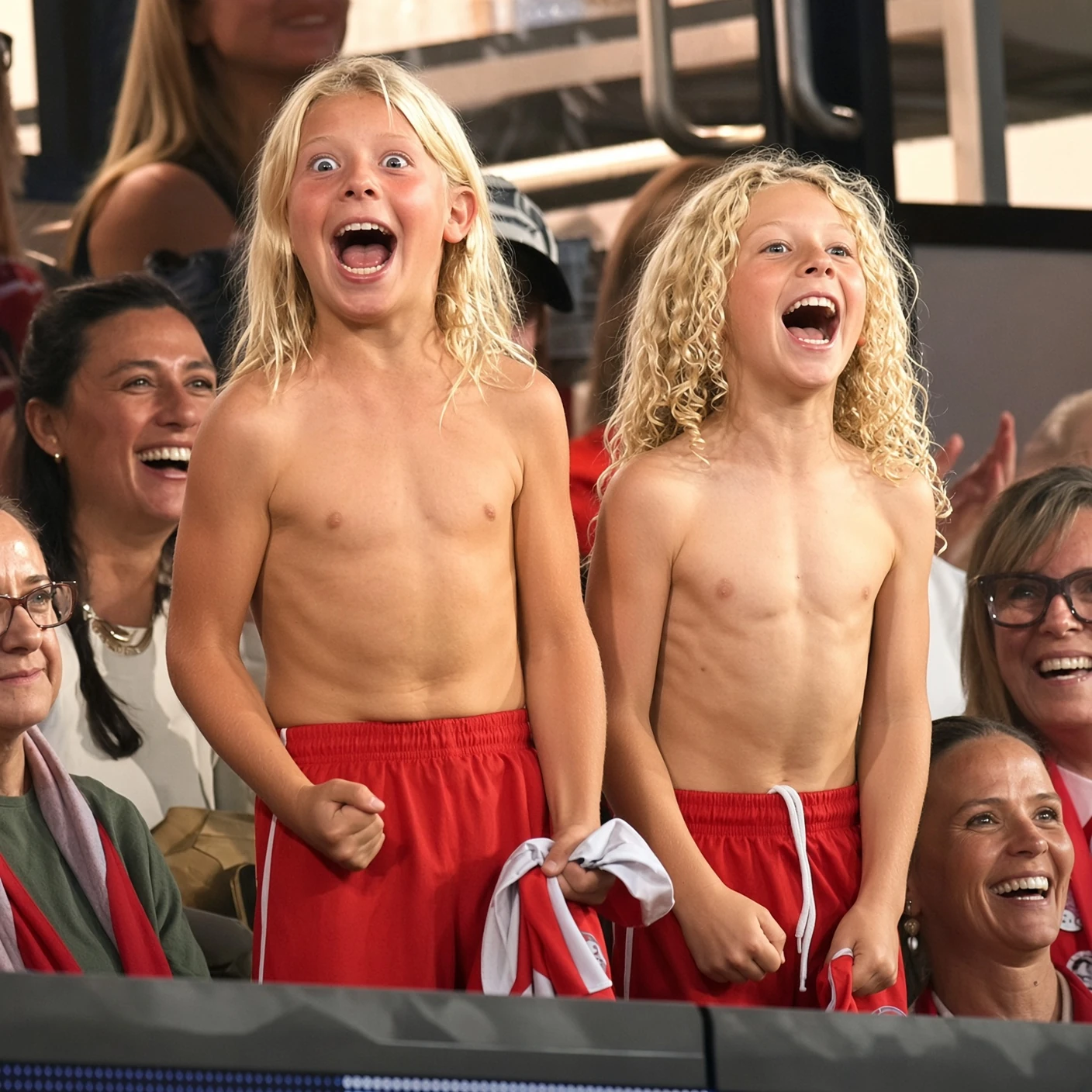
Former Sydney Swans captain Barry Hall’s young sons became unexpected stars of the AFL preliminary final at the SCG, with their animated support for Sydney going viral even as Fremantle produced a stunning late comeback to end the Swans’ season.
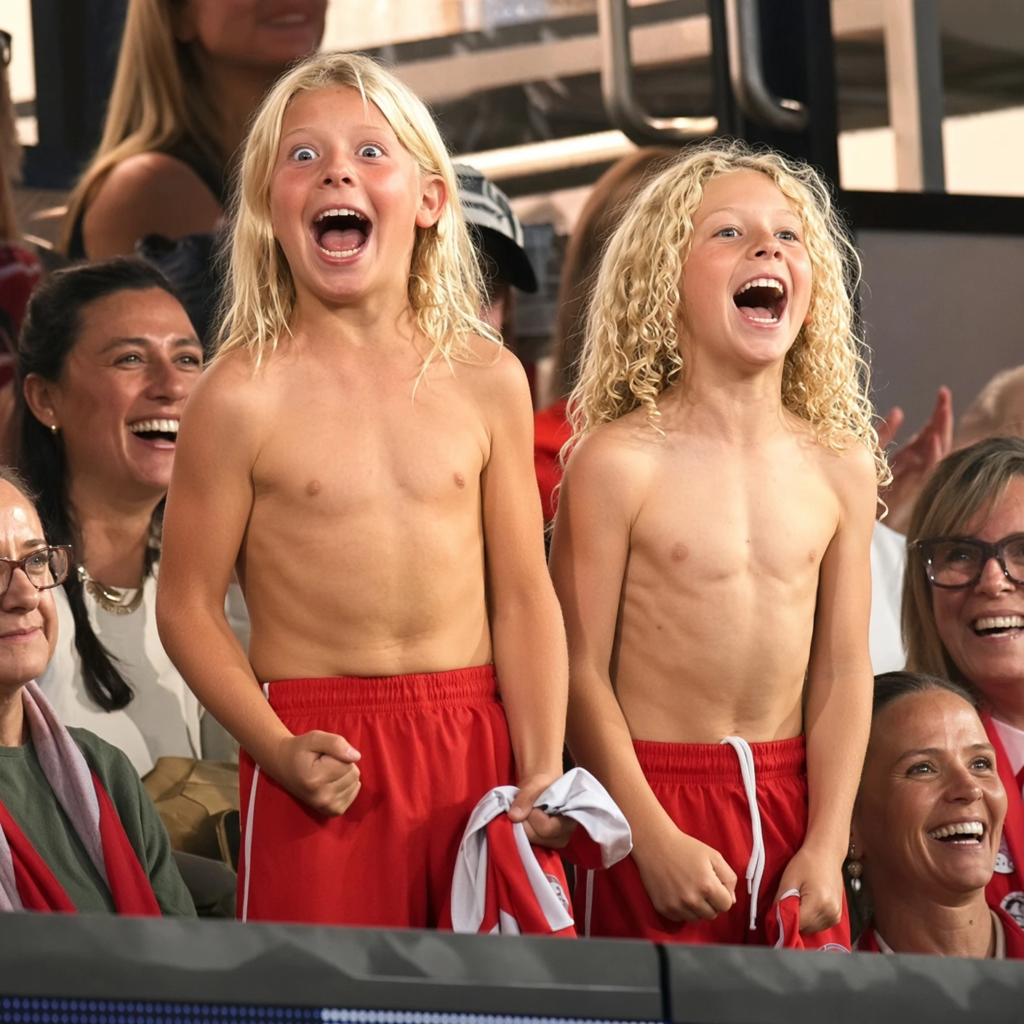
Nine-year-old Miller Hall and one of his brothers were repeatedly shown celebrating in the stands as Sydney built what looked like a match-winning lead against the minor premiers. Shirtless, shouting and waving Swans colours, the boys quickly became a social-media talking point and a light-hearted subplot to one of the most dramatic finals of the season.
Their father knows the stage well. Barry Hall played 162 games for Sydney between 2002 and 2009, captained the club for three seasons and was a central figure in the Swans’ 2005 premiership. His family’s presence at the SCG connected one generation of Sydney football with another, although the night ultimately belonged to Fremantle.
Sydney led for most of the preliminary final and at one point held a 28-point advantage late in the third quarter. The Swans had been the sharper side for much of the night, moving the ball quickly and applying enough pressure to prevent Fremantle from finding the rhythm that carried it through the home-and-away season.
But the Dockers changed the contest after the three-quarter-time siren. Hayden Young converted a difficult set shot to reduce the deficit, and Fremantle then overwhelmed Sydney in the final term, kicking the last six goals of the match to win 12.11 (83) to 10.11 (71).
The comeback sent Fremantle into only the second AFL grand final in the club’s history and its first since 2013. For Sydney, it brought an abrupt end to a finals campaign that had gathered momentum despite significant disruption and the absence of several senior players.
Against that serious sporting backdrop, the Hall brothers’ reaction offered one of the night’s most memorable crowd moments. Television cameras caught Miller celebrating with the kind of unfiltered enthusiasm familiar to anyone who has watched a child become absorbed in a football match.
Clips circulated quickly after the broadcast. Commentators and fans praised the boys’ energy, with Miller in particular drawing attention for expressive goal celebrations and a willingness to perform for the crowd without appearing self-conscious about the cameras.
That attention was not entirely new. Miller has previously appeared in media and advertising and has inherited some of the public curiosity attached to a well-known sporting family. But a live AFL preliminary final created a very different setting from a planned appearance or campaign.
The reaction also reflected the emotional arc of the game. Sydney supporters had every reason to believe their side was heading to another grand final while the Hall boys were at their most animated. The Swans controlled long stretches and entered the last quarter with a 21-point lead.
Fremantle then flipped the match. The Dockers dominated territory and contested possession in the final term, repeatedly locking the ball in their forward half and preventing Sydney from generating the clean exits that had worked earlier in the night.
Shai Bolton, Patrick Voss, Luke Jackson and Hayden Young were among the players who helped change the momentum, while Mason Cox took a major mark and converted a set shot that put Fremantle in front. Isaiah Dudley later sealed the result as the Dockers completed one of the club’s great finals comebacks.
The final-quarter numbers showed how dramatic the shift had been. Fremantle won the inside-50 count heavily in the last term and controlled clearances and contested possessions, leaving Sydney under near-constant pressure. A game that had seemed firmly in the Swans’ hands became a 12-point loss in a matter of minutes.
For Fremantle, the win created an opportunity to pursue the first AFL premiership in the club’s history. The Dockers advanced to the grand final against the winner of Hawthorn and Brisbane, carrying both the confidence of the comeback and the lesson that their preliminary-final performance had required a near-total reset after three quarters.
For Sydney, the defeat was especially painful because the club had done so much right before the collapse. The Swans finished second on the ladder, beat Brisbane convincingly in the qualifying final and entered the preliminary final at a sold-out SCG with a genuine chance to reach the premiership decider.
The team had also been forced to navigate absences that changed its best side late in the season. That made the run to the final four significant in its own right, even if the manner of the loss will linger through the off-season.
The night carried extra emotion for veteran players and supporters. Preliminary-final defeats create a hard boundary between one season and the next, and for older footballers they can immediately generate questions about contracts, retirement and whether another chance at a premiership will come.
None of that was visible in the Hall brothers’ early celebrations. Their appeal came from the opposite quality: complete immersion in the moment. The boys were not analysing structures, list management or the implications of a lost final. They were reacting to goals in front of a packed home crowd.
That is part of why sports broadcasts so often return to expressive supporters. A close-up of a nervous fan, a family celebrating or a child stunned by a goal can convey the emotional stakes more directly than another replay of a set play.
In this case, the family connection amplified the moment. Barry Hall remains strongly associated with Sydney’s transformation into a premiership club in the mid-2000s. Seeing his children emotionally invested in the Swans offered supporters a reminder of that era without requiring the broadcast to manufacture a tribute.
It would be premature to attach any sporting destiny to the boys themselves. Children of elite athletes often attract attention before their own interests or abilities are clear, and a viral crowd moment says nothing about whether they will eventually pursue football seriously.
What can be said is that Miller became one of the most recognisable supporters in the stadium for a few hours. His celebrations were replayed across television and social media and gave Sydney fans something joyful to share even after the result turned against them.
The contrast was sharp by the final siren. Fremantle players and supporters celebrated a place in the grand final, while Sydney’s players were left to process how a commanding position had disappeared. The Hall boys’ earlier confidence became part of the record of a game that changed completely in its final quarter.
The preliminary final was sold out well before match night, adding to the atmosphere around the Hall family’s reactions. The SCG crowd had watched Sydney’s finals momentum build after a strong qualifying-final win, and the early stages against Fremantle reinforced the sense that another grand-final appearance was within reach.
That context helps explain why the boys’ celebrations resonated. They were not performing in an exhibition or a low-stakes match; they were reacting inside a packed ground during a game that would decide a place in the AFL Grand Final. The images became memorable precisely because the emotion was spontaneous and the eventual result was so different from what the crowd expected at that moment.
That is often how finals memories work. The official history will record Fremantle’s 83-71 victory, its six-goal finish and its return to the grand final. Sydney supporters may remember the 28-point lead and the chance that slipped away. And many viewers will also remember two young Swans fans in red, reacting to every moment as if nothing else in the stadium mattered.