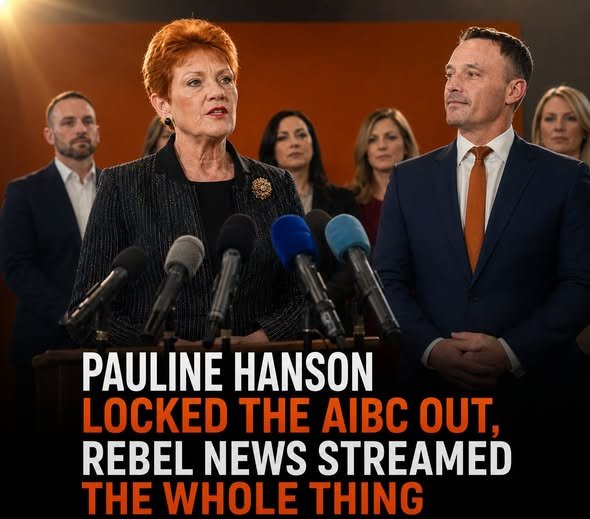
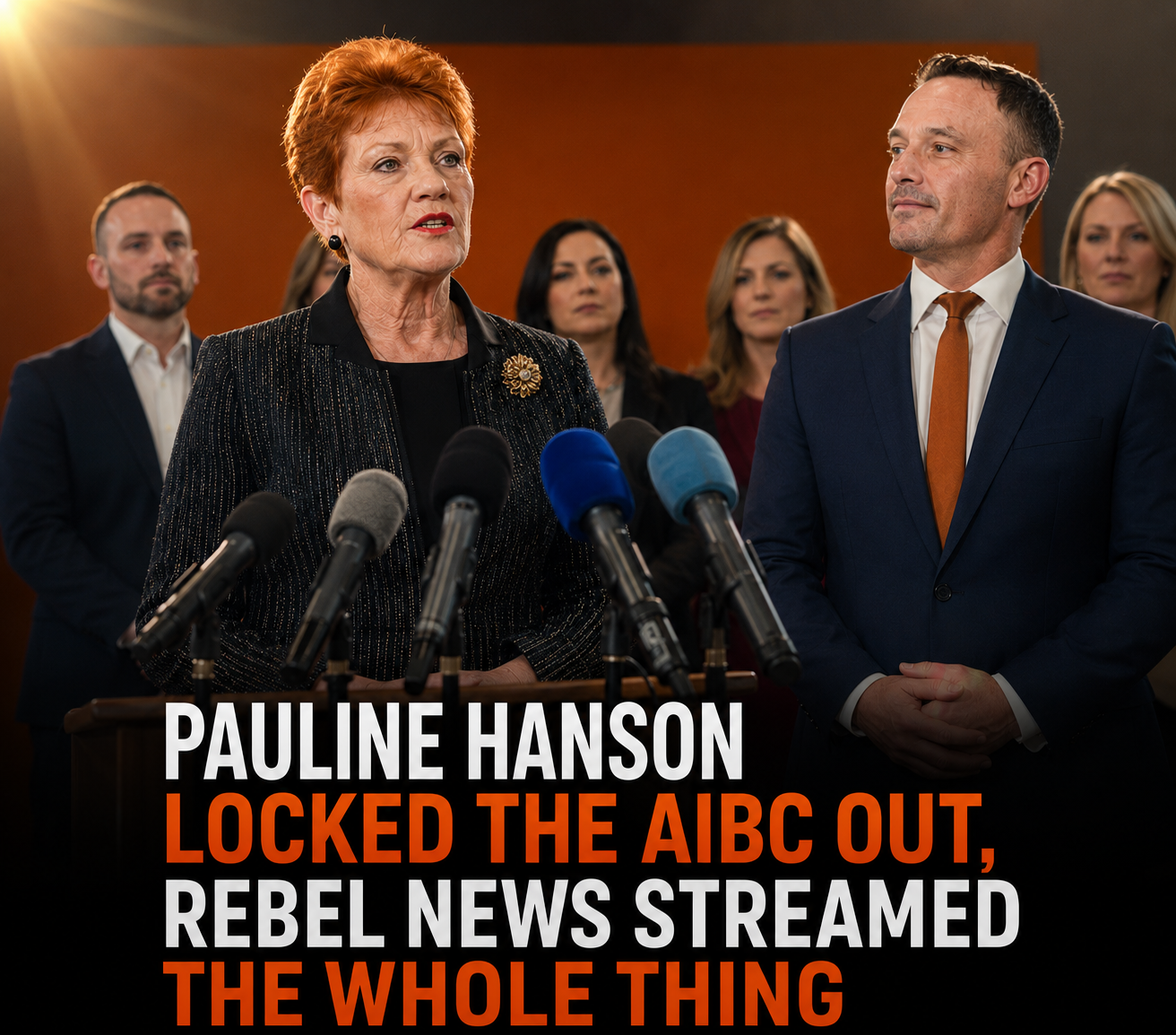
Pauline Hanson’s decision to exclude several of Australia’s largest media organisations from One Nation’s Victorian campaign launch has continued to generate political debate, but the party argues the public was still able to watch every question and every answer after Rebel News broadcast the entire press conference live and without edits.
The media controversy unfolded during One Nation’s official launch of its Victorian election campaign in Melbourne, where Senator Hanson introduced the party’s first group of candidates for the 28 November state election while outlining the broad direction of its campaign.
Before the event, One Nation decided not to provide the time or location of the press conference to journalists from the ABC, The Guardian, The Age and The Sydney Morning Herald, arguing those organisations had repeatedly reported on Hanson and the party unfairly.
Explaining the decision during the press conference, Hanson said the exclusion was prompted by what she described as repeated “spin”, “lies” and “gotcha moments” from outlets she believes consistently treat One Nation differently from other political parties.
“I’m not putting up with their rubbish. I’m not putting up with their spin, their lies whatsoever. I want truth and honesty. You get it from me, I expect it back from the media,” Hanson told reporters attending the event.
One Nation supporters argue the decision followed recent reporting suggesting Hanson had lamented the end of the White Australia policy—an interpretation she has publicly rejected.
According to Hanson, she had already denied that characterisation during an earlier public appearance in Perth and believes subsequent reporting misrepresented her position.
The outlets involved have stood by their reporting or published their own accounts of the controversy, and the disagreement remains part of an ongoing dispute over how Hanson’s comments have been interpreted in public debate.
Unlike the excluded organisations, Rebel News Australia was permitted to attend the Melbourne event.
The outlet livestreamed the entire press conference from beginning to end, allowing viewers to watch the proceedings in full rather than relying solely on edited news packages or selected excerpts.
The livestream included Hanson’s opening remarks together with an extended question-and-answer session involving multiple journalists.
Rebel News reporter Avi Yemini opened the discussion by asking Hanson why several major media organisations had been refused entry.
That exchange prompted Hanson to explain her decision directly before continuing with questions covering policy priorities, candidate selection, election strategy, coalition prospects and the party’s campaign agenda.
According to participants at the event, the press conference lasted more than 15 minutes and included questions from journalists representing a range of media organisations.
During the event, Victorian One Nation leader Warren Pickering said the party intended to begin releasing detailed policies within weeks.
He identified agriculture and energy among the first policy areas to be announced, followed by crime and government integrity measures as the campaign progressed.
Pickering also outlined One Nation’s intention to pursue stronger anti-corruption measures if elected, including a proposed royal commission with broad investigative powers.
On law and order, he said the party would seek increased police recruitment, fill currently unstaffed police stations and establish additional reserve policing capacity to improve community safety.
The media exclusion has nevertheless become one of the defining controversies of One Nation’s Victorian campaign launch.
Critics argue that political leaders should remain available to questioning from all accredited journalists regardless of editorial differences.
Employment and Workplace Relations Minister Amanda Rishworth criticised the decision, saying politicians should expect robust scrutiny and should not choose which reporters are permitted to ask questions.
Greens Senator Sarah Hanson-Young similarly accused Hanson of avoiding accountability by excluding particular news organisations from the event.
One Nation rejects that criticism.
The party argues that excluding selected organisations from a privately organised campaign event does not prevent public scrutiny because the full press conference was recorded and made publicly available.
Supporters say viewers could therefore assess Hanson’s remarks in their complete context rather than relying on edited television packages, headlines or selected quotations.
The dispute has also revived discussion about alternative and independent media in Australian political reporting.
In recent years, livestreaming technology has enabled political parties, independent journalists and digital publishers to broadcast campaign events directly to audiences without relying exclusively on traditional news organisations.
Supporters argue this approach allows voters to observe complete interviews and press conferences, reducing concerns that important context may be omitted during editing.
Critics, however, respond that livestreams do not replace the role of independent journalism.
They argue professional news organisations provide essential scrutiny by verifying political claims, asking difficult questions and supplying context that may not emerge during campaign events themselves.
The disagreement therefore reflects broader changes occurring across the media landscape.
As audiences increasingly consume political content through livestreams, podcasts and social media alongside traditional newspapers and broadcasters, debates about editorial fairness, transparency and public trust have become more prominent.
For One Nation, the livestream formed part of a wider effort to communicate directly with voters while reducing reliance on media organisations the party believes have consistently portrayed it unfairly.
At the same time, the controversy ensured that media access—not only policy announcements—became one of the dominant stories emerging from the Victorian campaign launch.
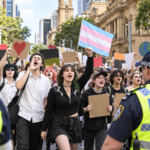
The event itself proceeded without interruption inside the venue, although protests outside required a significant Victoria Police presence, including Public Order Response officers and mounted police to maintain security around attendees.
As the Victorian election campaign continues, One Nation’s relationship with sections of Australia’s mainstream media is likely to remain under close scrutiny.
Whether other political parties adopt similar approaches to media access remains uncertain, but the episode has highlighted the growing role that direct digital broadcasting now plays in Australian election campaigns.
For voters, the debate ultimately extends beyond one press conference. It raises broader questions about media access, political accountability, editorial trust and the ways Australians receive information during election campaigns—issues that are likely to remain prominent throughout Victoria’s race to polling day.