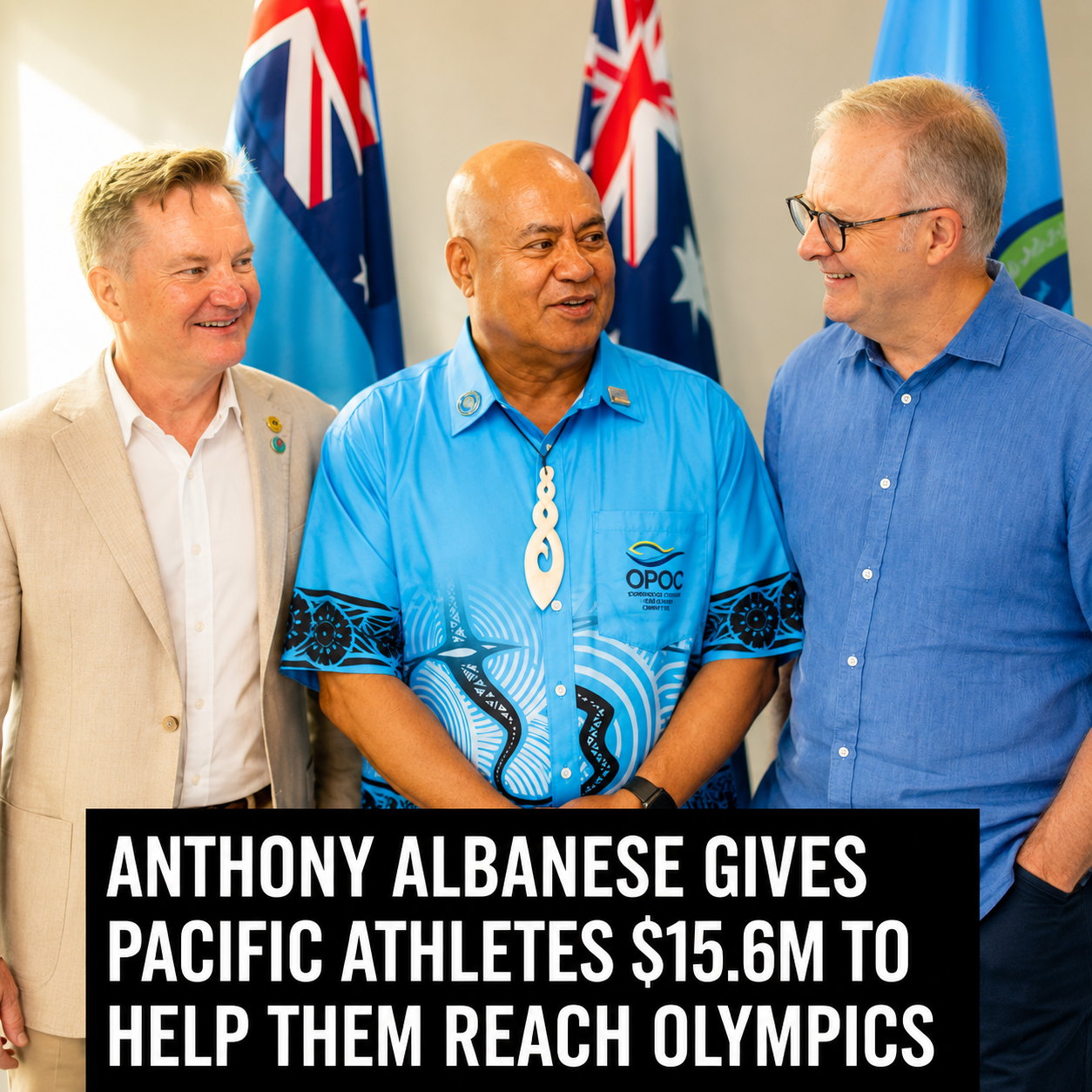
Australia will spend $15.6 million over four years helping Pacific athletes and sporting officials access elite training and international qualification events as the region prepares for the Brisbane 2032 Olympic and Paralympic Games.
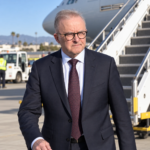
Prime Minister Anthony Albanese announced the initiative during the 55th Pacific Islands Forum Leaders’ Meeting in Palau, describing it as an investment in the next generation of sporting talent across Australia’s neighbourhood.
The official announcement says athletes and officials from 13 Pacific countries will benefit from the program — not 14 as some early reports stated.
The government has not identified all 13 participating countries in its announcement, but says the funding will provide access to high-performance training and opportunities to qualify for major international competitions.
The program will extend across the years leading towards Brisbane 2032 rather than being confined to preparations for a single Olympic campaign.
Pacific competitors will receive support around the Tahiti 2027 Pacific Games, the Los Angeles 2028 Olympic and Paralympic Games, the Rarotonga 2029 Pacific Mini Games and other international events.
Australia will deliver the initiative in partnership with the Australian Olympic Committee, Paralympics Australia, Commonwealth Games Australia and regional sporting organisations.
“The Pacific is home to incredible sporting talent,” Albanese said.
“This new partnership will contribute to producing the next generation of successful athletes.”
He said Australia wanted elite Pacific competitors to arrive at Brisbane 2032 with the best possible opportunity to succeed.
The commitment averages about $3.9 million a year over the four-year funding period, although the government has not publicly provided a country-by-country or sport-by-sport breakdown in its initial announcement.
Pacific Island Affairs Minister Pat Conroy said the investment was designed to produce benefits beyond medals.
He pointed to sport’s role in health, youth leadership and gender equality, saying international competition could create broader opportunities for athletes and their communities.
The Paralympic component will have a particularly practical focus.
Paralympics Australia said the new funding would support talent identification, athlete classification and Para sport-specific training camps across the Pacific.
Classification can be a major barrier for athletes with disability from smaller countries because competitors must satisfy international classification requirements before entering many elite Para sport events.
Under the new initiative, Australian and regional organisations will work on education for classifiers, training resources and support for Pacific athletes seeking international classification.
Paralympics Australia also intends to establish an Oceania Classification Strategy Implementation Lead to coordinate the work.
Its chief executive, Cameron Murray, said removing those structural barriers would allow more Pacific athletes with disability to pursue elite competition.
The $15.6 million package builds on a long-running Australian sports diplomacy program rather than establishing an entirely new policy direction.
PacificAus Sports already provides high-performance pathways for athletes, coaches, officials and administrators from the region.
In the 2026–27 aid budget, the government said PacificAus Sports was expected to help at least 10,000 athletes, officials and administrators gain access to training and elite competition opportunities.
The program has previously supported Pacific athletes attempting to qualify for the Olympics and Paralympics, as well as teams competing in rugby league, rugby union, football, netball, cricket and other sports.
A separate Australian program, Team Up, focuses more heavily on grassroots sport and community participation.
The government says hundreds of thousands of people have participated through those development initiatives.
The distinction matters because the new $15.6 million commitment is primarily aimed at the high-performance end of the sporting pathway.
Its objective is not simply to increase recreational participation but to give athletes who may already be among the best in their countries access to coaching, competition and qualification systems that can be expensive and difficult for small Pacific sporting federations to provide independently.
For some Pacific nations, international travel alone can be a major obstacle.
Athletes may need to attend qualifying competitions across Asia, Oceania or further abroad to achieve international rankings or qualification standards.
Smaller national sporting bodies can also have limited access to specialist coaches, sports science, medical support and competition environments of the standard routinely available to athletes from larger countries.
Australia’s initiative is designed to reduce some of those disadvantages before Brisbane hosts the Games in 2032.
There is also an unmistakable diplomatic dimension.
Australia’s official Sports Diplomacy Strategy 2032+ describes sport as an element of national power and says sporting links can be used to build relationships, strengthen Australia’s reputation and advance foreign-policy interests.
The strategy places particular emphasis on the Indo-Pacific.
It says major sporting events during Australia’s so-called “green and gold decade” create opportunities to deepen international relationships and project a modern image of the country overseas.
Brisbane 2032 is at the centre of that strategy.
Australia wants the Games to generate sporting benefits at home, but it also sees the event as a diplomatic platform stretching across the Pacific and wider Indo-Pacific.
The government’s policy document explicitly links sport with stronger people-to-people connections, gender equality, disability equity, regional resilience, trade, tourism and investment.
That wider approach explains why the Pacific athlete announcement was made at a leaders’ summit rather than at a domestic sporting event.
Albanese is in Koror from August 31 to September 3 for his fifth Pacific Islands Forum Leaders’ Meeting and his first official visit to Palau.
Climate Change and Energy Minister Chris Bowen and Conroy are also attending.
The forum is one of Australia’s most important regional diplomatic gatherings, bringing together Pacific leaders to discuss economic development, climate change, security and regional cooperation.
Australia’s increased use of sport sits alongside much larger investments in Pacific infrastructure, security, climate programs and economic development.
It also comes as Canberra seeks to demonstrate that its relationships with Pacific countries extend beyond high-level strategic competition.
Sport offers a comparatively visible form of engagement because the benefits can be attached to individual athletes, teams and major events.
Australia has already demonstrated its willingness to spend heavily in this area.
In July, the government launched a $250 million, 10-year Pacific Rugby League Partnership involving Papua New Guinea, Fiji, Samoa and Tonga.
That initiative forms part of a broader commitment associated with Pacific rugby league and the entry of a Papua New Guinea team into Australia’s NRL from 2028.
The latest Olympic and Paralympic package is much smaller financially but broader in sporting scope.
Rather than concentrating on one code, it is intended to improve access to international competition across multiple Olympic and Paralympic disciplines.
The approach has precedent.
Before the Paris 2024 Games, Australia supported more than 250 athletes from 13 Pacific nations through a partnership involving the Australian Olympic Committee.
The athletes competed across disciplines including athletics, swimming, boxing, weightlifting and rugby sevens.
Australia also helped Pacific Para athletes with training, classification and qualification for Paris.
The new commitment effectively extends that model towards Brisbane 2032.
Its success will eventually be measured not merely by how much money is spent but by whether Pacific athletes gain more qualification opportunities, reach more major events and build sustainable high-performance systems within their own countries.
The Palau visit has also produced another Australian-funded regional initiative.
On Wednesday, Albanese and Palauan President Surangel Whipps Jr announced that the Palau Paradise Express direct flight between Brisbane and Koror would be extended until November 30, 2027.
Qantas will increase the route to two services a week during Palau’s peak tourism season beginning this December.
The service operates under an arrangement between Qantas and the Australian Government.
More than 15,400 passengers have travelled on the direct connection since the government-supported service began in 2024.
The government estimates it contributed about $10 million to Palau’s economy in 2025 and helped increase total visitor expenditure by 26 per cent.
The financial cost of the latest extension was not disclosed in Wednesday’s announcement.
The route has a diplomatic as well as a commercial purpose.
Australia argues reliable air connections improve tourism, trade and people-to-people links with small Pacific countries where limited flight options can restrict economic development.
Qantas began operating the current direct Brisbane–Koror service in December 2024 after earlier government-supported connections were operated by other airlines.
The expanded service will now make shorter visits possible during the peak season rather than requiring passengers to stay for a full week between Saturday flights.
Palau has become personally familiar territory for Albanese as well.
He made a privately funded holiday visit to the country in October 2025 while on leave before an official visit to Washington.
The trip was not publicly announced in advance, but Palauan President Whipps later told the ABC he had spent time with Albanese discussing climate change while showing him coastal erosion and other environmental issues.
Reports at the time said Albanese and his then-fiancée Jodie Haydon travelled privately and flew economy.
However, claims that Albanese returned to Palau for his honeymoon in December 2025 are incorrect.
After marrying Haydon at The Lodge in Canberra on November 29, the Prime Minister took a privately funded honeymoon within Australia. Subsequent reporting placed the couple on Kangaroo Island in South Australia.
The clarification is relevant because the current visit is formally Albanese’s first official visit to Palau, despite his earlier private holiday.
The central announcement from this trip remains the new sporting commitment.
Australia will spend $15.6 million over four years attempting to ensure that geography, limited national resources and the cost of international competition do not prevent talented Pacific athletes from reaching the world stage.
For the athletes involved, the immediate prize is access to better training and a clearer route through Tahiti, Los Angeles and other qualifying competitions.
For Canberra, there is another objective as well: when the Olympic and Paralympic world arrives in Brisbane in 2032, Australia wants significantly more of its Pacific neighbours competing alongside it.