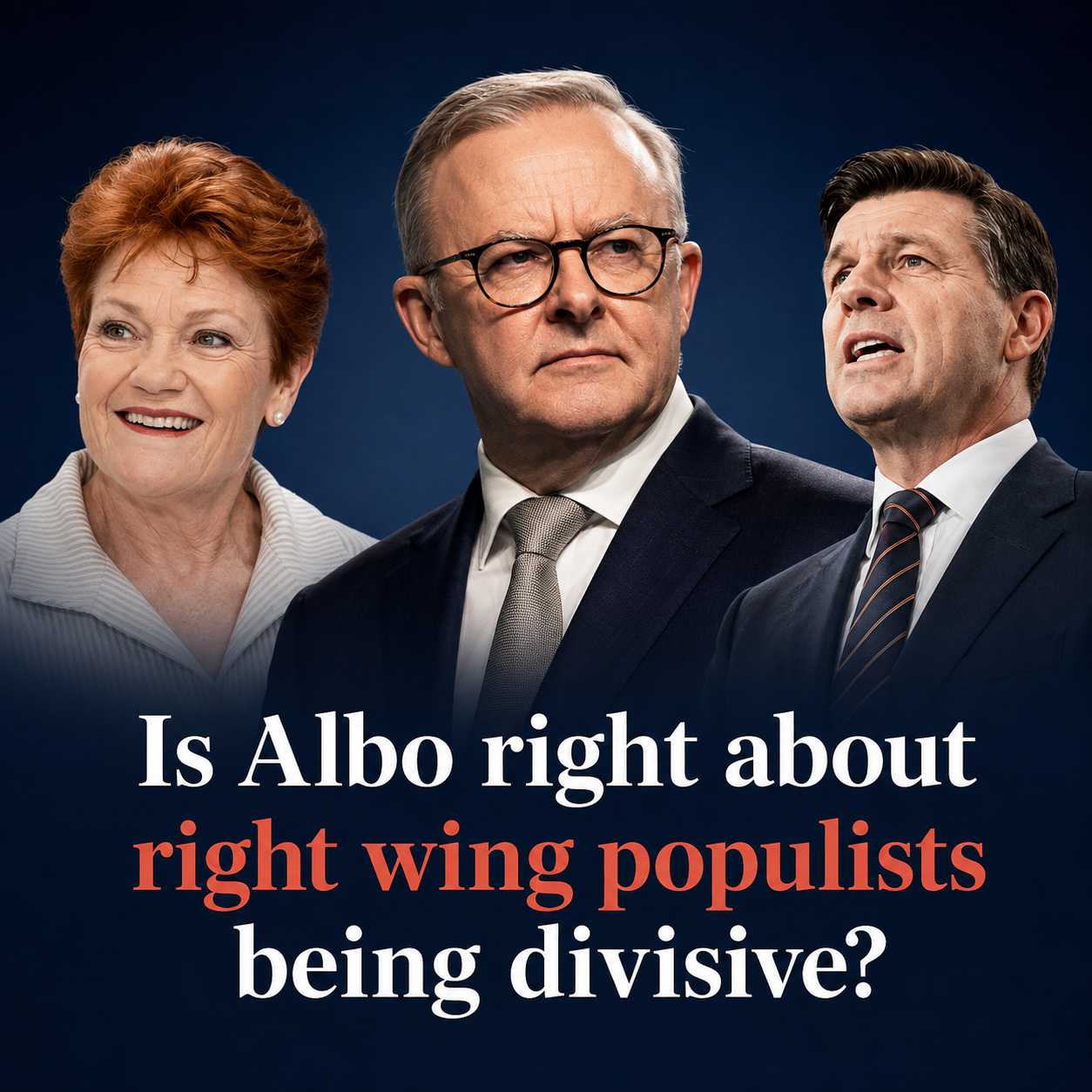
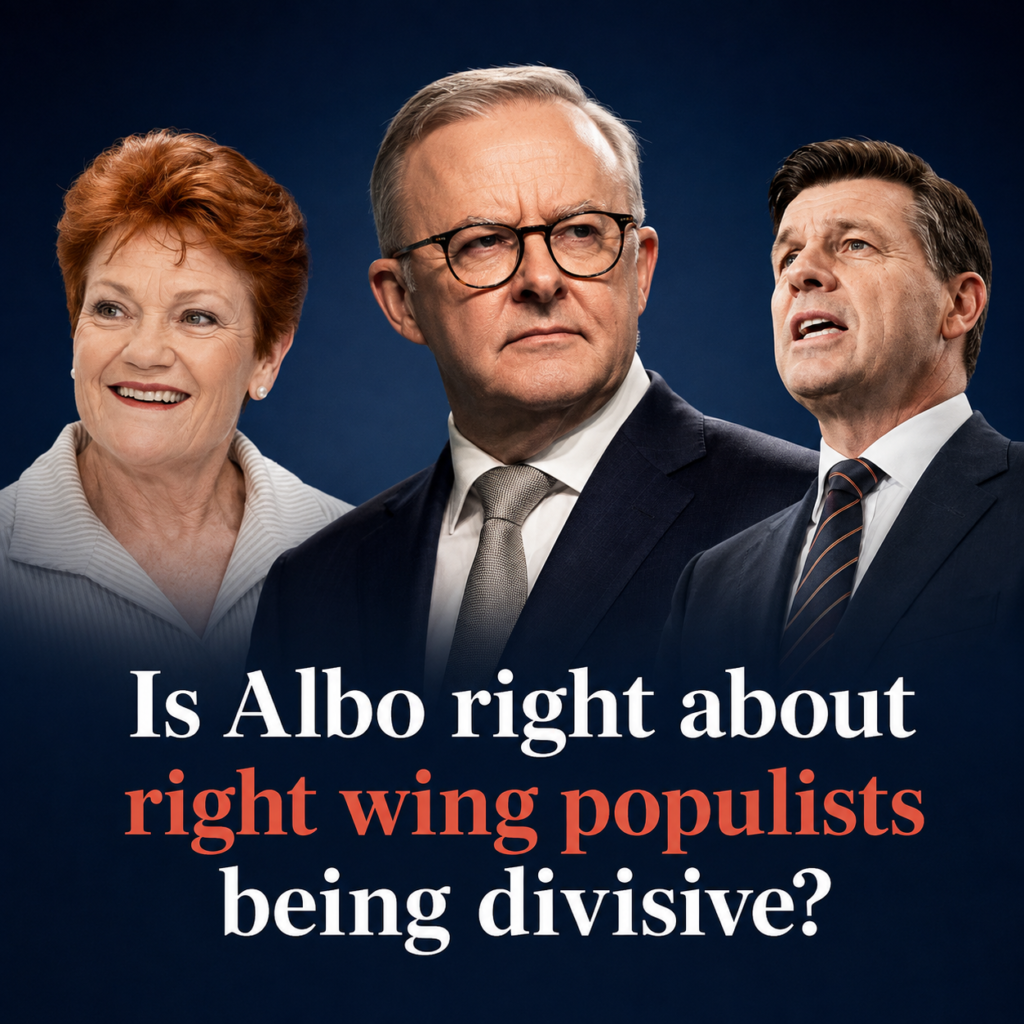
Pauline Hanson’s One Nation has edged ahead of Labor to lead Australia’s latest Newspoll on primary votes, intensifying pressure on the major parties just as Prime Minister Anthony Albanese launches his strongest attack yet on the party’s rapidly expanding political influence.
The latest national survey puts One Nation on 30 per cent of the primary vote, one point ahead of Labor on 29 per cent and 11 points ahead of the Coalition on 19 per cent.
The Greens sit on 13 per cent.
It is another striking result for a party that only a year ago remained well outside the traditional major-party contest and reinforces evidence that Hanson is attracting voters from both sides of Australian politics.
But the headline result requires an important qualification.
A one-point advantage in a single national opinion poll does not establish that One Nation is definitively Australia’s largest political party among voters, nor does leading the primary vote automatically translate into winning government under Australia’s preferential electoral system.
A separate RedBridge poll released at almost the same time produced a slightly different picture, placing Labor first on 29 per cent, One Nation on 28 per cent and the Coalition on 22 per cent.
What the two surveys do agree on is the broader trend: One Nation is now operating at a level of national support that places it firmly alongside — and sometimes ahead of — parties that have dominated federal politics for generations.
The timing could hardly be worse for Labor or the Coalition.
The Newspoll was conducted during the week leading into Saturday’s Secret Harbour by-election in Western Australia, meaning most or all of its fieldwork preceded One Nation’s dramatic victory in the previously safe Labor electorate.
Luke Herdegen went on to defeat Labor candidate Georgia Tree in the outer-suburban Perth seat, giving One Nation its first lower-house MP in Western Australia.
The victory offered tangible evidence that the party’s polling surge can now be converted into seats.
For Albanese, the response has been confrontation rather than imitation.
Addressing Queensland Labor’s state conference on Sunday, the Prime Minister warned of what he described as “hard-right populists” promoting politics that was “dangerous, divisive and downright dishonest”.
“We simply must defeat them. We owe it to history,” Albanese told Labor delegates.
He accused populist political movements of bending facts, spreading misinformation and turning Australians against one another, while arguing that One Nation lacked serious solutions to the country’s problems.
Albanese also sought to portray the party’s internal policy disputes as evidence of what could happen if it gained greater governing responsibility.
He pointed to recent confusion surrounding One Nation’s migration policy, as well as controversial positions and comments associated with party figures.
The Prime Minister argued Labor’s answer should not simply be to attack grievance politics but to offer voters economic security and optimism.
“The best way to defeat this coalition of chaos is to give Australians real hope of a better future,” he said.
The rhetoric represents a significant change in the way federal Labor is dealing with Hanson.
For much of One Nation’s modern resurgence, the major parties faced a strategic choice between confronting the party directly and avoiding giving it additional publicity.
With One Nation now polling around 30 per cent and winning lower-house seats, ignoring it is becoming increasingly difficult.
Hanson responded immediately to Albanese’s speech, accusing the Prime Minister of going beyond legitimate political criticism.
Speaking in Victoria on Monday, she said Albanese had “crossed a line” and argued that describing One Nation as dangerous could contribute to hostility directed towards her.
Hanson said she had been receiving death threats and suggested a prime minister should be more careful about the language used against political opponents.
Labor rejected the accusation that Albanese was inciting violence.
The dispute escalated further on Tuesday when Attorney-General Michelle Rowland said threats against politicians were unacceptable but argued Hanson should also reflect on her own political conduct and the people she had chosen to engage with.
Rowland referred to extremists and convicted figures who have appeared around elements of One Nation’s broader political orbit and said political leaders had responsibilities regarding the standards they encouraged.
Hanson demanded an apology and accused the Attorney-General of effectively blaming her for threats made against her.
The increasingly personal confrontation is unfolding against an unusually volatile polling environment.
Newspoll’s 30 per cent result gives One Nation the highest primary support of the three major political groupings measured in that survey.
Yet voters gave a different answer when asked who they preferred as prime minister.
Albanese remained well ahead on 46 per cent, Hanson recorded 31 per cent and Liberal leader Angus Taylor received 23 per cent.
That gap demonstrates an important distinction between dissatisfaction with the established party system and willingness to make Hanson prime minister.
Newspoll also found Labor ahead of One Nation by 56 per cent to 44 per cent when preferences were distributed in a hypothetical contest between the two.
The contemporary Australian electoral landscape therefore cannot be understood simply by ranking primary votes.
House of Representatives elections are determined constituency by constituency using compulsory preferential voting. A party can lead nationally on first preferences while failing to win enough individual seats to govern.
Preference flows between the Coalition, One Nation, Labor, the Greens and independents would become critical in any election where One Nation maintained support near current polling levels.
The separate RedBridge survey illustrates the uncertainty.
It placed One Nation at 28 per cent — three points lower than its previous result — with Labor on 29 per cent and the Coalition on 22 per cent.
On respondent-allocated preferences between Labor and One Nation, RedBridge had Labor ahead 52 per cent to 48 per cent.
The difference between the polls is not unusual. Surveys use different samples and methodologies and are snapshots rather than election results.
The more consequential finding is that both now place One Nation close to Labor and comfortably ahead of the Coalition on primary support.
For the Coalition, that may be the most alarming part of the political shift.
One Nation historically drew much of its support from voters on the conservative side of politics, particularly in regional Queensland.
Its current appeal is broader.
The party has been targeting outer-suburban mortgage holders, regional workers and traditional Labor voters through campaigns centred on cost of living, migration, housing, energy prices and distrust of political institutions.
The Secret Harbour result showed the potential effectiveness of that strategy.
The electorate had been considered Labor territory, yet One Nation finished first and relegated the Liberals to a distant third.
The party has also demonstrated its ability to take seats from the other side of politics.
Earlier this year, David Farley won the federal seat of Farrer, previously held by former Liberal leader Sussan Ley, while One Nation secured four lower-house seats at the South Australian election.
Those results complicate any attempt to describe Hanson’s rise simply as a conservative revolt against the Liberal Party.
One Nation is now attempting to compete simultaneously with Labor in working-class areas and the Coalition in regional and conservative electorates.
That creates different problems for Albanese and Taylor.
Labor must decide how far it can respond to voter concerns over migration, housing and cost of living without appearing to adopt One Nation’s agenda.
The Coalition must persuade conservative voters that it remains the credible alternative government when a large share of its traditional base appears willing to consider Hanson instead.
For One Nation, the challenge is shifting in the opposite direction.
Greater support brings greater scrutiny.
The party’s recent dispute over migration provides an example.
One Nation says it wants net overseas migration reduced to 130,000 annually, but different senior figures have struggled to explain consistently how temporary workers, permanent migration and Pacific labour programs would fit within that figure.
Hanson and Barnaby Joyce have since insisted the 130,000 figure refers to net overseas migration, even though language on the party’s website has referred to “capping visas” at that level.
Such contradictions mattered less when One Nation was a minor parliamentary force. They matter considerably more when polls suggest it could become one of the largest blocs in the House of Representatives.
Albanese is clearly trying to exploit that vulnerability.
His strategy is to frame the contest not simply as Labor versus One Nation on migration or cost of living, but as a choice between experienced government and what he describes as unstable populist politics.
Hanson, meanwhile, is presenting Labor’s increasingly aggressive attacks as proof the government is frightened by her party’s success.
Both narratives now have an electoral test.
Victoria goes to the polls in November, where One Nation is investing heavily in regional and outer-suburban seats and campaigning against renewable-energy infrastructure, net-zero policies and migration.
New South Wales follows in March 2027, with the party installing Mike Newman as its state leader and targeting traditionally safe seats such as Cessnock.
At federal level, current polling raises questions that would have sounded implausible little more than a year ago: whether One Nation could become the largest non-Labor force in the House, whether the Coalition could be pushed into third place in a significant number of electorates, and how preferences would operate in three-way contests.
None of those outcomes is guaranteed.
Polling can change rapidly, particularly when an insurgent party moves from protest politics towards detailed scrutiny of candidates, policy costs and potential governing arrangements.
One Nation itself experienced a dramatic rise and fragmentation after winning 11 Queensland seats in 1998, a precedent Albanese specifically invoked in his speech.
But the current situation is already different in one important respect.
One Nation’s resurgence is no longer measured only by opinion polls.
It now includes electoral victories in federal, South Australian and Western Australian lower houses, a growing party organisation and primary-vote polling around the level normally associated with a major national political force.
The latest Newspoll therefore matters less because One Nation is exactly one point ahead of Labor than because 30 per cent no longer looks like an isolated result.
Australia’s political contest is increasingly becoming a three-sided fight.
Albanese has made clear that Labor intends to confront Hanson directly.
Whether that strategy stops One Nation’s rise — or gives the party another grievance around which to mobilise its supporters — may become one of the defining questions of Australian politics over the next year.