OPINION: Fifteen people were murdered at a Jewish Chanukah celebration on Bondi Beach. Forty more were wounded. Australians were promised the country’s most powerful form of public inquiry into how antisemitic hatred, extremism and institutional failures culminated in that atrocity.
Now the public hearings of the Royal Commission into Antisemitism and Social Cohesion are over.
More than 20,000 submissions were received. There were 346 witnesses, nine hearing blocks and 62 hearing days.
Yet a deeply uncomfortable question remains.
Has the Australian public actually been allowed to see enough of the evidence explaining how an antisemitic terrorist attack of this scale was able to happen?
The public hearings are finished
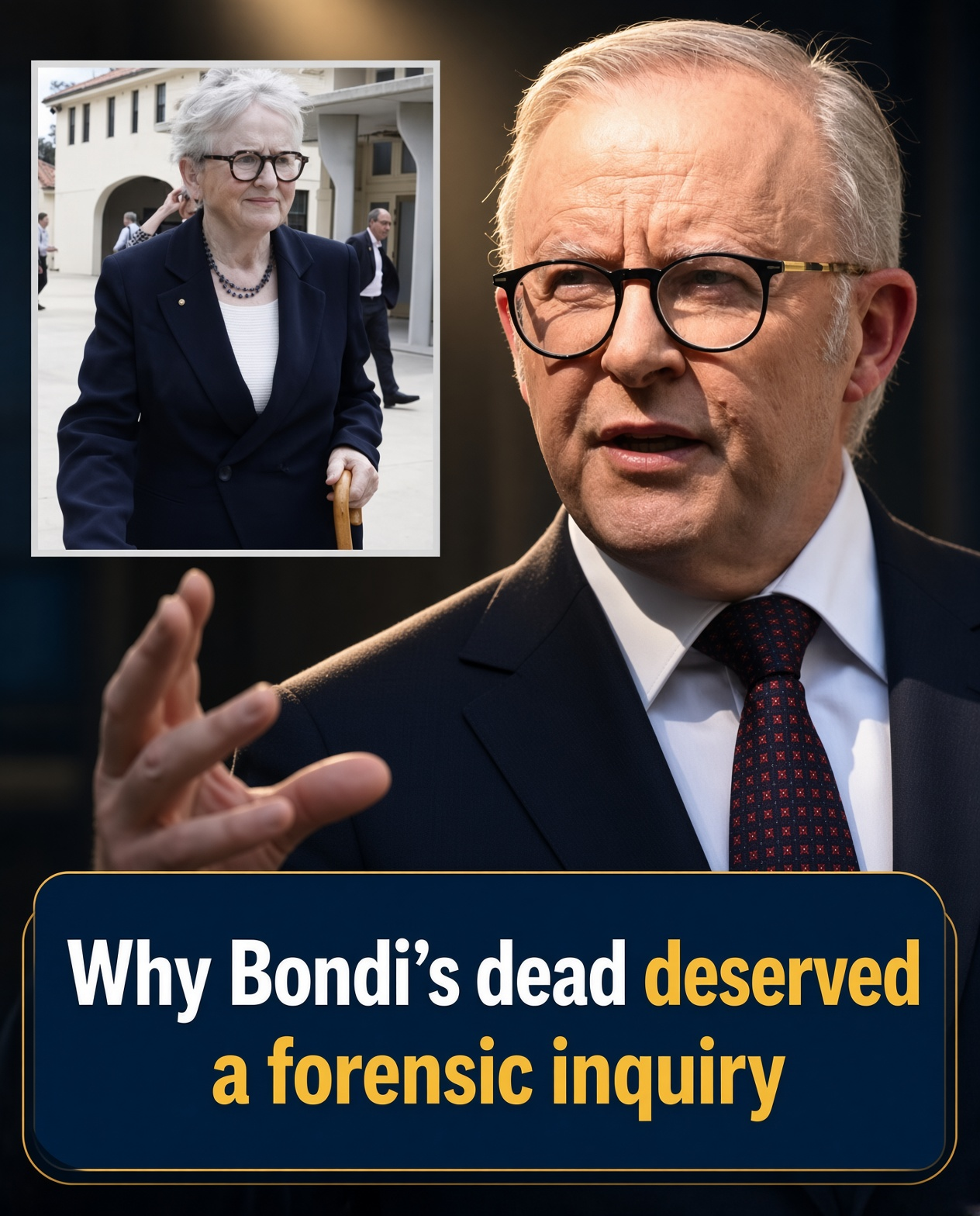
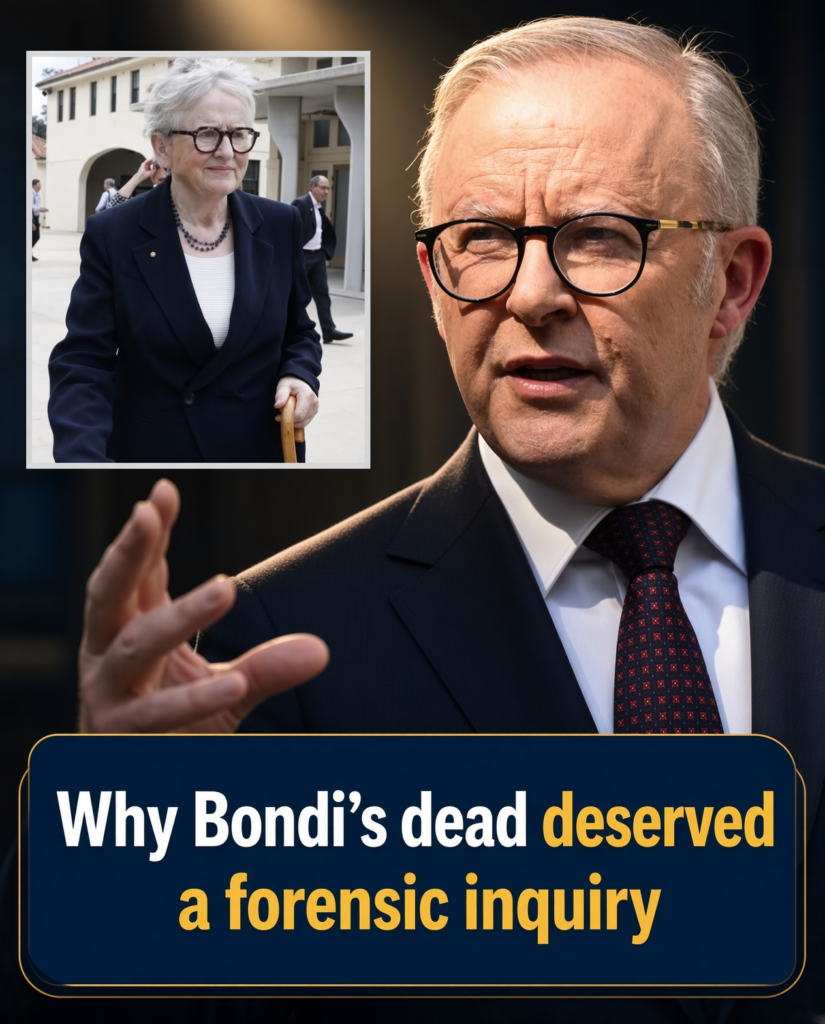
Commissioner Virginia Bell AC SC brought the public-hearing phase of the royal commission to an end on Wednesday, August 26.
The inquiry was established on January 9 following the Bondi terrorist attack of December 14, 2025.
That gives the entire royal commission an unusually compressed timetable.
Its final report had originally been required by December 14, 2026 — exactly one year after the massacre.
The final report will now come four days later
Bell has decided the final report will instead be submitted on December 18.
The change is not intended to provide months of additional investigation.
It is a four-day postponement designed to prevent publication of the report from overshadowing commemorations marking the first anniversary of the attack.
The substantive timetable therefore remains essentially unchanged.
Was the royal commission too short?
Critics have characterised the inquiry as one of the shortest royal commissions in Australian history.
That precise historical ranking is difficult to establish from authoritative comparative data.
What can be said confidently is that the timetable was extremely tight for an inquiry of this breadth.
The Letters Patent expressly required Bell to conduct the inquiry “as expeditiously as possible”.
This was never just an inquiry into one afternoon at Bondi
The royal commission’s mandate was enormous.
It was required to investigate antisemitism across Australian society and institutions.
It was also required to examine its drivers, including religious and ideologically motivated extremism and radicalisation.
Then there was the Bondi massacre itself.
The commission had to examine the planning and lead-up to the attack, intelligence sharing, security arrangements, the attack and emergency response, the performance of intelligence and law-enforcement agencies, counter-terrorism powers and potential gaps in Australia’s laws.
Radicalisation was explicitly inside the terms of reference
That point matters when considering criticism that radical Islam received insufficient scrutiny.
Religiously motivated extremism was not excluded from Bell’s mandate.
Quite the opposite.
The Letters Patent explicitly instructed the commission to investigate “religiously and ideologically motivated extremism” and radicalisation, including factors leading to the Bondi attack.
The legitimate question is therefore not whether the commission was allowed to examine Islamist extremism.
It was.
The question is how thoroughly that subject was explored in public.
The Bondi attackers were not an abstract security threat
The attack occurred during a Jewish Chanukah celebration at Bondi Beach on December 14, 2025.
Fifteen people were killed and another 40 were wounded.
Authorities have described it as an antisemitic terrorist attack.
The alleged attackers were father and son Sajid and Naveed Akram.
Sajid was shot dead by police.
Naveed survived and faces criminal proceedings, including terrorism and murder charges.
The Akrams had previously come to ASIO’s attention
One of the most consequential facts examined by the inquiry was that the men had previously come onto Australia’s counter-terrorism radar.
ASIO had investigated them from at least 2019 in connection with links to an Islamic State cell.
The agency ultimately assessed that they did not present a terrorism threat requiring continued active attention.
Years later, 15 Australians were dead.
Understanding that gap is precisely the sort of task for which royal commissions exist.
What did authorities know?
The official scope of the second public hearing block demonstrates the seriousness of the questions Bell was examining.
The commission investigated what intelligence and law-enforcement agencies knew about the shooters.
It examined what agencies did with that information.
It considered how intelligence about known individuals was shared and used.
It investigated firearms licensing.
It examined counter-terrorism resourcing and the security environment before the massacre.
Those are exactly the right questions
No serious assessment of the commission should pretend these subjects were ignored.
They were explicitly examined.
The problem is different.
Much of the evidence capable of answering the most important questions was not heard publicly.
Australians were given only part of the story
The ABC described the public’s access to the Bondi scrutiny as a “keyhole view”.
During one crucial phase examining policing and intelligence failures, the public observed just over 12 hours of questioning involving 10 witnesses across roughly two and a half days.
Much of the more sensitive evidence was reserved for closed hearings.
That necessarily limited the public’s ability to independently judge what went wrong.
There are legitimate reasons for secrecy
This cannot simply be dismissed as a cover-up.
The commission faces two genuine legal constraints.
First, intelligence evidence can contain classified material whose publication would compromise national security.
Second, Naveed Akram is facing criminal proceedings.
A royal commission cannot recklessly publish evidence that could prejudice his right to a fair trial.
Bell’s commission therefore had legitimate reasons to conduct portions of the inquiry behind closed doors.
But legitimate secrecy still has a democratic cost
The existence of good reasons for closed hearings does not make the consequences disappear.
The families of those murdered at Bondi want answers.
The Jewish community wants answers.
Australians who fund ASIO, the AFP and state police forces want to know whether warning signs were missed.
And accountability has a fundamentally different character when evidence is tested publicly rather than behind closed doors.
ASIO’s counter-terrorism resourcing came under scrutiny
Another major issue was the allocation of Australia’s intelligence resources before the attack.
ABC reporting revealed that ASIO Director-General Mike Burgess had reduced counter-terrorism resourcing to its lowest proportional level since the September 11 attacks.
Burgess defended the decision before the commission, including his decision not to seek additional government funding.
That evidence deserved rigorous examination because resource allocation is one of the clearest ways governments and agencies translate threat assessments into real-world security.
The police preparations at Bondi were inadequate
The commission’s April interim report had already identified serious problems with preparations for the Chanukah by the Sea event.
It made 14 recommendations for urgent action.
The Commonwealth government accepted every recommendation applying to it.
The findings demonstrated that legitimate questions about institutional performance were not speculative.
Warnings from the Jewish community matter
The attack did not occur in a vacuum.
Australia had experienced an escalating wave of antisemitism following the Hamas attacks on Israel on October 7, 2023 and the war that followed.
Jewish organisations had repeatedly raised concerns about security.
The commission has examined the extent to which authorities understood and responded to that changing threat environment.
Could the Bondi attack have been prevented?
This is perhaps the most painful question of all.
No counter-terrorism system can guarantee that every attack will be stopped.
Intelligence agencies constantly assess people who never commit an offence, alongside a much smaller number who ultimately become dangerous.
Hindsight can make ambiguous warning signs appear obvious.
But those realities cannot become an excuse to avoid examining whether mistakes were made.
The commission found no urgent legislative failure
The interim findings also complicate claims that Australia’s counter-terrorism laws were plainly incapable of dealing with the threat.
Bell found that existing legal and regulatory frameworks did not prevent agencies from acting to prevent or respond to the Bondi attack.
The commission concluded at the interim stage that no urgent or immediate legislative action was required on that front.
That makes questions about intelligence, assessment, implementation, resources and decision-making even more important.
No political leaders were called publicly
One of the strongest criticisms emerging as the hearings concluded concerns political accountability.
Despite more than 20,000 submissions and 346 witnesses, no political leaders or cabinet ministers were called to give evidence.
That is difficult to ignore.
The commission was examining not merely the actions of individual police officers but Australia’s institutional response to years of escalating antisemitism and extremist threats.
Governments set the environment in which agencies operate
Ministers do not conduct surveillance or decide which individual terrorism subjects should be monitored.
They should not.
But governments determine budgets.
They set legislative frameworks.
They establish policy priorities.
They respond — or fail to respond — when communities repeatedly warn that threats are escalating.
Those are legitimate subjects for public accountability.
Chris Minns wanted more time
NSW Premier Chris Minns has publicly supported extending the royal commission’s hearings.
That is significant because New South Wales originally planned its own inquiry after the massacre before stepping aside in favour of the federal royal commission and avoiding duplication.
Minns therefore has a substantial interest in ensuring the national inquiry adequately addresses the failures surrounding an attack that occurred in his state.
Bell believes the commission has enough evidence
The commissioner has resisted calls for an extension.
Bell says the inquiry has collected sufficient material to address its Terms of Reference and produce its findings.
That judgment deserves respect.
A former High Court justice presiding over a royal commission has access to an enormous body of material that outside commentators do not.
But public confidence depends on more than the quantity of evidence sitting inside the commission’s files.
Public accountability requires public testing
This is the central tension.
A royal commission can privately obtain every document it needs and still leave the public feeling that fundamental questions were never tested in the open.
Australians cannot evaluate classified hearings they cannot see.
They cannot assess questions that were never publicly put to ministers who were never called.
And they cannot know what confidential evidence will eventually emerge until criminal proceedings have concluded.
Bell says some Bondi material cannot yet be released
On the final day of hearings, Bell acknowledged that the commission possesses substantial evidence concerning the massacre that cannot presently be made public because doing so could prejudice the criminal case.
Some of that material will form a confidential component of the final report.
The intention is for substantial portions to become public after the criminal proceedings are completed.
That promise is important.
But justice delayed can also mean accountability delayed
Australians may eventually learn considerably more about what ASIO, police and other agencies knew.
That future disclosure could answer some of today’s criticisms.
It cannot, however, reproduce the effect of senior decision-makers being questioned publicly while national attention is focused on the inquiry.
The phrase ‘radical Islam’ needs precision
There is also an important distinction that political commentary should preserve.
Islam is a religion followed peacefully by hundreds of thousands of Australians.
Islamist terrorism or religiously motivated violent extremism describes a specific extremist ideology and security threat.
Conflating the two is neither accurate nor useful to counter-terrorism.
The commission’s own Terms of Reference appropriately use the language of religiously motivated extremism and radicalisation.
Precision does not mean avoiding the ideology
At the same time, fear of unfairly stigmatising Muslim Australians cannot become a reason to avoid examining extremist ideology where evidence shows it is relevant.
If Islamic State ideology influenced an antisemitic terrorist attack, Australians are entitled to understand that ideological pathway.
How did radicalisation occur?
Who influenced it?
What warning signs existed?
Were extremist networks involved?
Did agencies understand the threat?
Those are security questions, not attacks on an entire religious community.
That forensic examination is what the victims deserved
Fifteen deaths demand more than a broad discussion about social cohesion.
The victims deserved a forensic reconstruction of every significant failure preceding the attack.
Their families deserve to know what authorities knew.
They deserve to know what authorities missed.
They deserve to know whether decisions that appeared reasonable at the time were actually reasonable when measured against the intelligence available.
The commission has done substantial work
Criticism should not erase the scale of the investigation.
More than 20,000 submissions and 346 witnesses represent a considerable body of evidence.
The commission has examined victims’ experiences, antisemitism in institutions, education, universities, policing, intelligence, extremism, social cohesion and the Bondi attack itself.
Its interim report has already generated practical recommendations.
The final report may change the assessment
That is the major caveat to any judgment made today.
Bell has not yet delivered her final findings.
Evidence unavailable publicly may prove central to those conclusions.
The final report may contain a far more comprehensive account of Islamist extremism, radicalisation, intelligence failures and government decision-making than was visible through the public hearings.
It would therefore be premature to declare the royal commission a failure.
But the concerns about transparency are already legitimate
Australians should not have to pretend that the public process was exhaustive when substantial evidence was necessarily heard in secret.
Nor should questions about the absence of senior political witnesses be dismissed merely because hundreds of other witnesses appeared.
Even Australia’s public broadcaster raised serious concerns months ago about how little of the crucial counter-terrorism scrutiny Australians were being permitted to observe.
The standard must be exceptionally high
Royal commissions exist because ordinary reviews are sometimes insufficient.
They possess extraordinary powers precisely because they are expected to investigate extraordinary failures.
After 15 people were murdered at a religious celebration, the appropriate standard is not whether the commission technically completed its Terms of Reference.
The standard is whether Australia learned everything reasonably possible about why those people died and what must change to prevent another massacre.
December 18 will be the real test
Bell’s final report will ultimately determine whether today’s criticism was justified.
Australians should look for clear findings about the radicalisation behind the attack.
They should expect a detailed assessment of ASIO and police decisions.
They should expect answers about intelligence sharing, firearms licensing, counter-terrorism resources and security planning.
And they should expect an honest assessment of the political and institutional environment in which antisemitism escalated before Bondi.
If those answers are there, the compressed public-hearing schedule may ultimately prove defensible.
If they are not, Australians will be entitled to ask why a royal commission established after the murder of 15 people was allowed to conclude without publicly and forensically testing every major institution, ideology and decision that may have contributed to the catastrophe.