Australia’s $4 trillion-plus superannuation system has become the centre of an increasingly bitter political fight over a deceptively simple question: once 12 per cent of a worker’s salary is compulsorily directed into super, who should control what happens to that money?
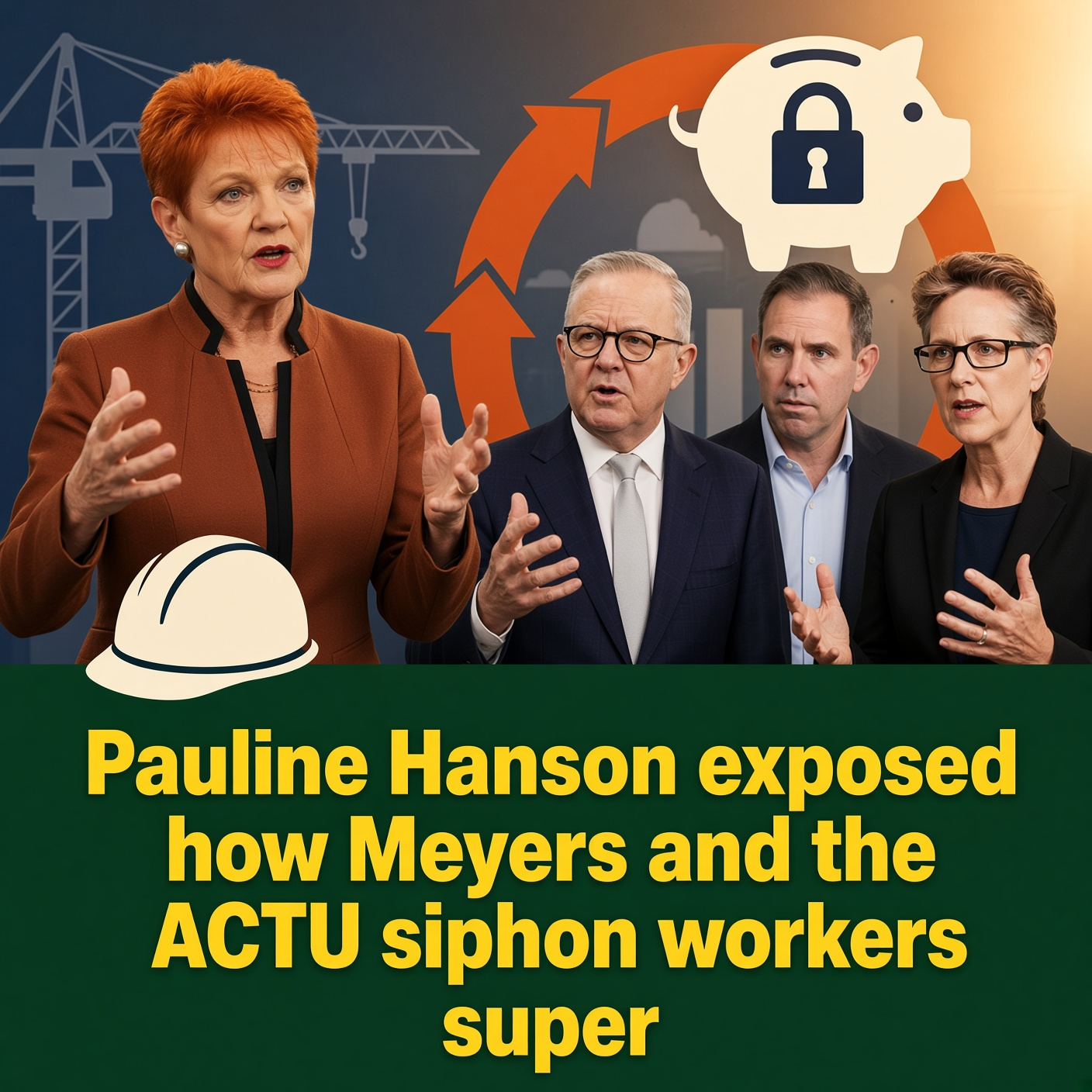
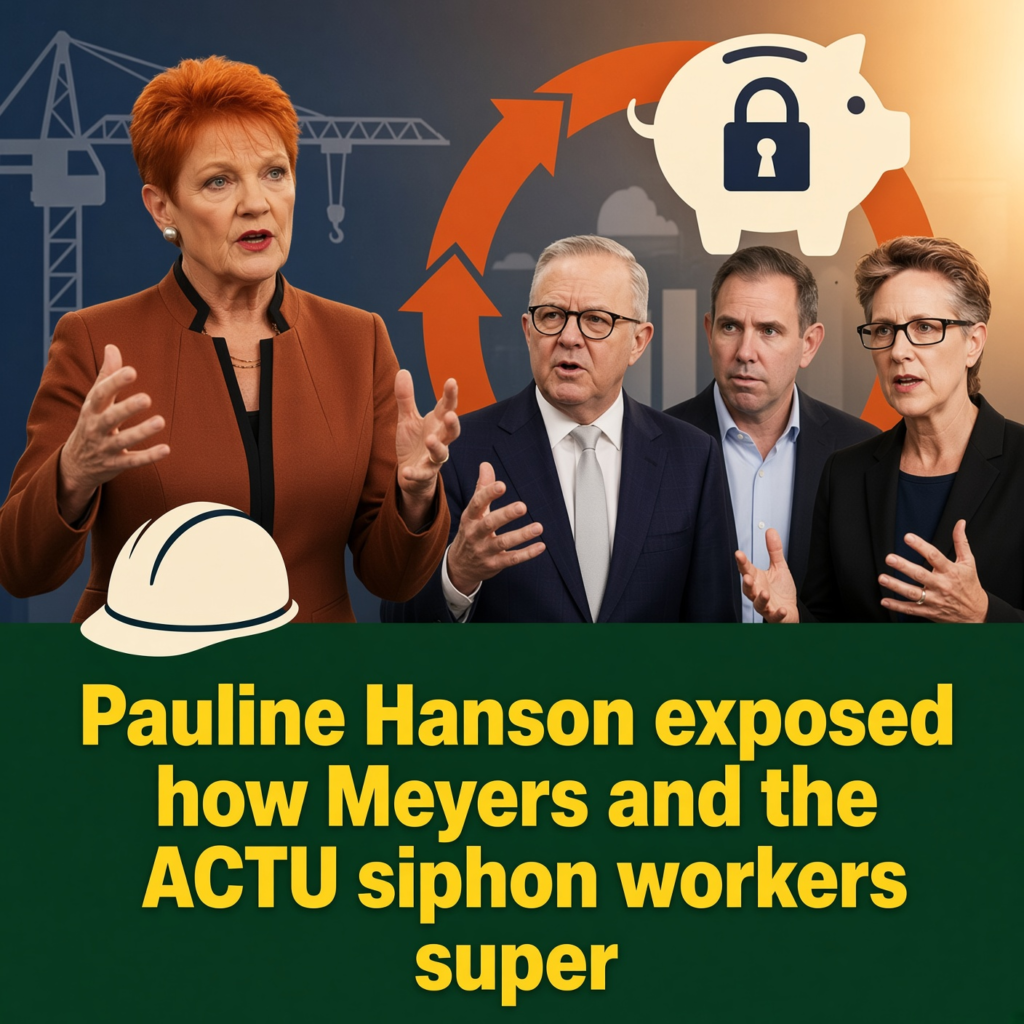
Labor and some of Australia’s largest unions have launched a major campaign defending compulsory superannuation after Pauline Hanson and Liberal Senator Andrew Bragg reignited calls for Australians to have greater control over their retirement savings.
The Australian Council of Trade Unions says its “Hands Off Our Super” campaign will continue all the way to the next federal election in 2028.
Treasurer Jim Chalmers has gone further, describing the emerging political push as the biggest threat to compulsory super in four decades.
But behind the political slogans sits another argument that is attracting renewed scrutiny: how super funds themselves spend members’ money, including payments made to unions, employer organisations and other industrial bodies.
Every Australian worker is now putting 12 per cent into super
Australia’s compulsory super system has grown into one of the largest pools of retirement capital in the world.
The Superannuation Guarantee reached 12 per cent on July 1, 2025.
For most eligible employees, that means their employer is required to contribute an amount equal to 12 per cent of ordinary time earnings into super.
The money belongs beneficially to members, but access to it is heavily restricted until retirement or another legally permitted condition of release is satisfied.
There are limited exceptions, including severe financial hardship, compassionate grounds, incapacity and terminal illness.
Those restrictions are now becoming one of Australia’s hottest political arguments.
Pauline Hanson says: ‘It is their money’
Hanson has put individual ownership at the centre of One Nation’s argument.
She says Australians struggling with mortgages and living costs should have more flexibility to use their super before retirement.
“It is their money,” Hanson said while discussing the system.
She has described compulsory superannuation as “broken” and suggested Australians facing genuine financial hardship should have greater access to their balances.
Hanson has also backed allowing super to assist with buying a home, subject to conditions designed to preserve the retirement component of the investment when a property is subsequently sold.
Importantly, Hanson says she does not support simply abolishing Australians’ superannuation savings.
Labor says the entire system is under threat
Chalmers sees the argument very differently.
The Treasurer has attempted to connect Hanson’s proposals with criticism of compulsory super from within the Liberal Party.
Liberal frontbencher Andrew Bragg has called compulsory super a “loss of liberty” and described the system as one of Australia’s great public-policy failures.
Bragg’s argument is more fundamental than Hanson’s.
He questions whether Australians should be compelled to divert such a substantial proportion of their remuneration into a system they cannot freely access for decades.
Labor has seized on those comments.
Chalmers has warned that a future combination of Liberals, Nationals and One Nation could “end super as we know it”.
Hanson says Chalmers is misrepresenting her position
That claim produced an unusually blunt response from Hanson.
She rejected the suggestion that One Nation wants to scrap people’s retirement savings and accused Chalmers of misrepresenting her position.
Her stated argument is for greater flexibility, not the confiscation or abolition of existing balances.
Barnaby Joyce has made a similar case since joining One Nation.
Joyce argues it makes little sense for someone to possess substantial retirement savings while being unable to feed themselves or facing the loss of their home.
Existing laws already recognise that principle to a limited extent through hardship and compassionate-release provisions.
The political dispute is about how much further Australia should go.
Now the unions are entering the fight
Some of Australia’s most powerful unions have responded by launching a coordinated campaign to defend the existing compulsory system.
ACTU Assistant Secretary Joseph Mitchell says the campaign will run through to the next federal election.
Unions representing nurses, construction workers and other employees are participating.
Their message is that superannuation represents deferred wages and provides working Australians with retirement security that previous generations often lacked.
They fear broader early access would progressively drain balances and ultimately leave more Australians dependent on the Age Pension.
The campaign therefore sets up a stark political divide: greater individual control today versus preserving retirement savings for tomorrow.
But there is another question: how are super funds spending members’ money?
The political defence of super has revived scrutiny of an issue that has existed for years.
Superannuation trustees incur substantial expenses in managing funds.
Those expenses can include administration, investment management, advertising, sponsorship, advice, member services, directors’ remuneration and payments to outside organisations.
Some industry funds also make payments to unions, employer associations and other industrial bodies.
Those payments are now subject to significantly greater public disclosure than they were in the past.
APRA publishes where some of that money goes
The Australian Prudential Regulation Authority expanded its public reporting of super-fund expenditure beginning in 2024.
The regulator specifically identified payments involving industrial bodies and related parties as matters of public interest.
Its disclosure framework includes detailed expenditure categories and information about recipients.
These can include promotion, marketing and sponsorship expenditure, payments involving industrial bodies, related-party expenses and political donations.
APRA said the objective was to provide greater transparency over how trustees spend money entrusted to them by members.
That means Australians can increasingly scrutinise financial relationships between their super funds and outside organisations rather than relying solely on political claims about where the money goes.
A payment to a union is not automatically a political donation
This distinction is essential.
APRA does not classify every payment to a trade union as a political donation.
Its reporting framework contains separate classifications for industrial-body expenses, marketing and sponsorship, related-party transactions and political donations.
A super fund might, for example, pay an organisation for advertising, member acquisition, sponsorship or another contracted service.
Whether that expenditure represents good value for members is a legitimate question for trustees and regulators.
But it cannot automatically be described as money donated to a political party.
APRA defines political donations separately, based on payments meeting the relevant electoral-law definition.
Cbus has faced particularly intense scrutiny
Few funds illustrate the controversy better than Cbus.
The construction industry super fund has deep historical connections to both construction unions and employer organisations.
Those relationships are not incidental.
Cbus was established through the construction industry and its governance history reflects the industry-super model in which employee and employer representatives have significant roles.
That structure has generated recurring arguments about payments to sponsoring organisations.
The controversy goes back years
Historical material examined during the banking royal commission included a KPMG review of payments made by Cbus to sponsoring organisations.
Those organisations included unions and employer bodies.
The review examined sponsorship arrangements that Cbus said were intended to produce benefits including member acquisition and retention, increased super contributions and brand value.
Political opponents have repeatedly questioned whether such expenditure represents appropriate use of members’ retirement savings.
Industry funds have argued that legitimate marketing and sponsorship arrangements can benefit members by strengthening membership, scale and the fund’s commercial position.
APRA has also intervened directly at Cbus
The debate is not limited to partisan attacks.
Australia’s prudential regulator has previously identified concerns around Cbus’s expenditure-management framework.
In August 2024, APRA imposed additional licence conditions on United Super, the trustee of Cbus.
The regulator said its intervention addressed concerns involving fitness and propriety processes and fund expenditure management.
Cbus at that time had approximately 923,000 members and $92 billion under management.
The regulator escalated its action in 2025
APRA subsequently accepted a court-enforceable undertaking from United Super in February 2025.
The regulator said it had identified material prudential concerns and required Cbus to undertake a broad risk-transformation program.
APRA also launched an investigation.
By that stage, Cbus had more than 920,000 member accounts and approximately $100 billion under management.
Those interventions demonstrate that questions about governance and expenditure at super funds are legitimate regulatory issues — not merely political talking points.
They do not, however, establish that every payment from Cbus to a union is improper or politically motivated.
So does workers’ super money fund Labor?
This is where political rhetoric frequently jumps ahead of the evidence.
Industry super funds can make disclosed payments to unions and other organisations.
Unions can separately spend their own funds on political campaigns and make political donations subject to electoral disclosure requirements.
Many Australian unions have longstanding institutional and financial relationships with the Labor Party.
But those facts alone do not establish that a particular dollar deducted as a super contribution travelled from an individual worker’s account through a super fund, into a union and then into a Labor election campaign.
Establishing that claim requires tracing specific transactions rather than simply connecting organisations that have financial relationships with one another.
Political donations are specifically identified in APRA’s framework
This is one reason APRA’s reporting system matters.
The regulator defines a political donation separately from other expenses.
Its definition covers gifts made to political entities, political campaigners or associated entities within the meaning of federal electoral law.
Those expenses can therefore be distinguished from other payments to industrial bodies.
If critics believe super funds are directly financing political parties, the strongest evidence would be disclosures showing precisely those transactions.
Payments to unions for other stated purposes do not prove the same proposition.
That does not make the expenditure question disappear
There is still a legitimate argument over whether members receive sufficient benefit from money paid by their super funds to external organisations.
Superannuation trustees do not have unrestricted discretion over members’ savings.
They operate under duties requiring them to act in members’ interests and comply with prudential and superannuation law.
If money is spent on sponsorship, advertising or services, the central question is whether the trustee can justify that expenditure as benefiting members.
APRA’s push for greater transparency allows members, journalists, politicians and regulators to test those justifications.
The Labor-union relationship makes the issue politically combustible
Australia’s industry-super system grew from the union movement’s push to expand retirement savings beyond employees who already enjoyed occupational schemes.
The ACTU openly celebrates that history.
It credits union figures including Bill Kelty and construction unions with helping build the model that eventually developed into universal compulsory superannuation.
That history explains why unions regard compulsory super as one of their greatest policy achievements.
It also explains why critics are suspicious when unions simultaneously campaign to protect the system while maintaining relationships with major industry funds.
Joseph Mitchell sits squarely inside that history
ACTU Assistant Secretary Joseph Mitchell has worked on superannuation policy for years.
Before reaching his current senior position, he served as the ACTU’s workers’ capital organising officer and has appeared before parliamentary inquiries on super policy.
He has also participated in ACTU superannuation trustee forums alongside executives and trustees from some of Australia’s largest funds.
Mitchell’s position is not that workers should surrender their retirement savings to unions.
His public argument is that compulsory preservation and collective investment produce better retirement outcomes for working Australians.
He has also advocated super-fund investment in areas such as affordable housing where he argues commercial returns and broader national benefits can coexist.
Chalmers sees super as an economic asset as well as retirement savings
The Treasurer has similarly argued that Australia’s enormous pool of super capital can contribute to national investment priorities while continuing to generate returns for members.
Labor has encouraged institutional investment in housing, infrastructure and the energy transition.
Supporters see that as a logical use of Australia’s extraordinary pool of long-term capital.
Critics worry governments will increasingly try to influence where private retirement savings are invested.
That philosophical disagreement is becoming almost as important as the debate over early access.
Who actually owns the money?
On one fundamental point, Hanson is right: superannuation is not government revenue.
It exists for the benefit of fund members.
But Australia’s system deliberately restricts those members’ immediate ability to spend it.
The policy justification is that compulsory preservation produces a larger retirement balance decades later.
That creates an unusual arrangement.
A worker beneficially owns their super, yet Parliament determines when they can access it, while a trustee controls how pooled assets are invested subject to legal obligations.
The current political fight is ultimately about how far those restrictions should extend.
The mortgage argument is especially powerful
Housing is where the debate becomes most difficult for defenders of strict preservation.
A worker can simultaneously have tens or hundreds of thousands of dollars in super and struggle to obtain a deposit for a home.
Another person may have retirement savings while experiencing acute mortgage stress.
Hanson and Joyce argue that forcing someone to preserve every available dollar for retirement can become perverse if that person loses their home today.
Labor and unions counter that broad housing access risks driving up property prices and stripping workers of compound investment returns that would otherwise accumulate for decades.
Existing law already allows emergency access
Australia’s system is not completely inflexible.
Early release can already occur under defined circumstances.
These include severe financial hardship and compassionate grounds such as certain medical expenses, disability-related modifications, palliative care, funeral expenses and preventing foreclosure or the forced sale of a home.
Recent ATO figures cited in the current political debate show substantial demand for compassionate release.
About $1.4 billion was approved for release last year, with medical treatment accounting for a large number of applications.
The Hanson-Joyce argument is essentially that these gateways remain too narrow.
Labor thinks this could become an election-defining fight
The scale of the union response suggests Labor believes compulsory super can become an electoral dividing line comparable to previous campaigns over Medicare and industrial relations.
“Hands Off Our Super” is not designed as a short advertising burst.
Mitchell says the campaign will continue until the 2028 federal election.
Nurses, construction unions and other worker organisations are being mobilised around the message that retirement savings are under threat.
Chalmers has adopted essentially the same framing.
But Labor’s attack carries a vulnerability
The more aggressively Labor and unions tell Australians that super must remain protected from political interference, the more critics will scrutinise how funds spend members’ money and how governments seek to influence investment priorities.
That makes transparency crucial.
Australians should be able to see payments to unions.
They should be able to see payments to employer organisations.
They should be able to identify political donations.
And trustees should be able to explain why material expenditure produces a benefit for members.
That principle should apply regardless of whether the recipient is a union, an employer association, a consultant, an advertising company or another related organisation.
The disclosures matter more than the slogans
Claims that Labor and union bosses are simply “siphoning” Australians’ retirement accounts into political campaigns are stronger than the evidence presently establishes.
But dismissing concerns about super-fund expenditure would be equally unjustified.
APRA itself has determined there is strong public interest in making industrial-body payments, related-party expenses and political donations transparent.
And its previous regulatory intervention at Cbus demonstrates that expenditure governance is something Australia’s prudential regulator takes seriously.
The appropriate response is therefore not to assume every union payment is corrupt.
It is to demand enough disclosure to determine exactly what each payment was for.
$4 trillion-plus means enormous power
The size of Australia’s superannuation system has transformed the argument.
What began decades ago as a retirement-income reform has produced one of the world’s largest pools of investment capital.
That capital gives super funds enormous influence over Australian companies, property, infrastructure and financial markets.
Governments want it invested productively.
Unions want it preserved for retirement.
Fund managers want to maximise long-term returns.
Hanson and other critics want individual Australians to exercise more control over it.
Those interests will not always align.
The real fight is only beginning
Australians are therefore likely to hear much more about super before the next federal election.
Labor will argue that compulsory preservation protects workers from poverty in retirement.
Unions will portray attempts to weaken the system as an attack on one of their greatest achievements.
Hanson will keep returning to a much simpler proposition: it is the worker’s money.
And critics of industry funds will continue following the expenditure disclosures to see where members’ money is being spent.
The strongest answer to that scrutiny is not a political slogan from either side. It is complete transparency — showing Australians exactly where their compulsory retirement savings go, who receives payments from their funds, what those payments purchase, and whether members receive value in return.